Many people don’t associate bleeding gums with heart disease, as these seem like two entirely separate issues—one managed by dentists, the other by doctors. However, by 2026, this distinction will no longer exist.
Today, health is viewed as an interconnected system. Surprisingly, one of the earliest indicators of long-term health problems doesn’t appear in your chest or blood tests—it begins quietly in your mouth.
If you’re in your 30s or early 40s, balancing work, family, and other responsibilities, dental care might not be a top priority. Skipping a cleaning or experiencing some sensitivity may not seem urgent.
But what if these minor signs are influencing your health years down the line?
It Often Starts Small and Is Easy to Overlook
Consider your daily habits. You brush your teeth, perhaps twice a day. Occasionally, you notice slight bleeding, some gum swelling, or less fresh breath.
Most people dismiss these symptoms.
“It’s normal.”
“It will go away.”
“I’ll get it checked later.”
The issue is that these are often the first signs of gum inflammation.
At this point, there’s no pain and no disruption to your daily life. Yet, beneath the surface, your body is responding. Your gums are inflamed, and your immune system is actively combating bacterial buildup.
If left untreated, this can progress to periodontitis—a chronic gum infection that doesn’t remain confined to your mouth.
Your Mouth Is Connected to Your Whole Body
For a long time, dentistry and general medicine were treated as separate fields. But that perspective has shifted.
Your mouth contains billions of bacteria, known as the oral microbiome. When healthy, this ecosystem is balanced. However, when harmful bacteria dominate, they create sticky layers called biofilm (plaque) on your teeth and gums.
Here’s the crucial part.
Inflamed gums develop tiny, invisible openings in the tissue. These serve as entry points, allowing bacteria from your mouth to enter your bloodstream.
Once inside, these bacteria don’t just stay put—they travel throughout your body.
The Silent Path from Gum Health to Heart Health
A remarkable and somewhat alarming discovery in recent years is the connection between oral bacteria and heart health.
Scientists have identified that the bacteria found in gum infections are also present in the fatty plaques inside arteries. These plaques gradually cause the arteries to narrow and harden, a condition called atherosclerosis.
This development is gradual and takes years to occur.
Here’s how it happens:
- Gum disease allows bacteria to enter the bloodstream
- The body responds with inflammation
- This inflammation impacts the blood vessels
- Over time, it contributes to plaque accumulation in the arteries
The body releases inflammatory substances such as C-reactive protein (CRP), which are closely linked to cardiovascular risk.
So, even if your gums only show slight bleeding now, the long-term consequences can affect much more than just your mouth.
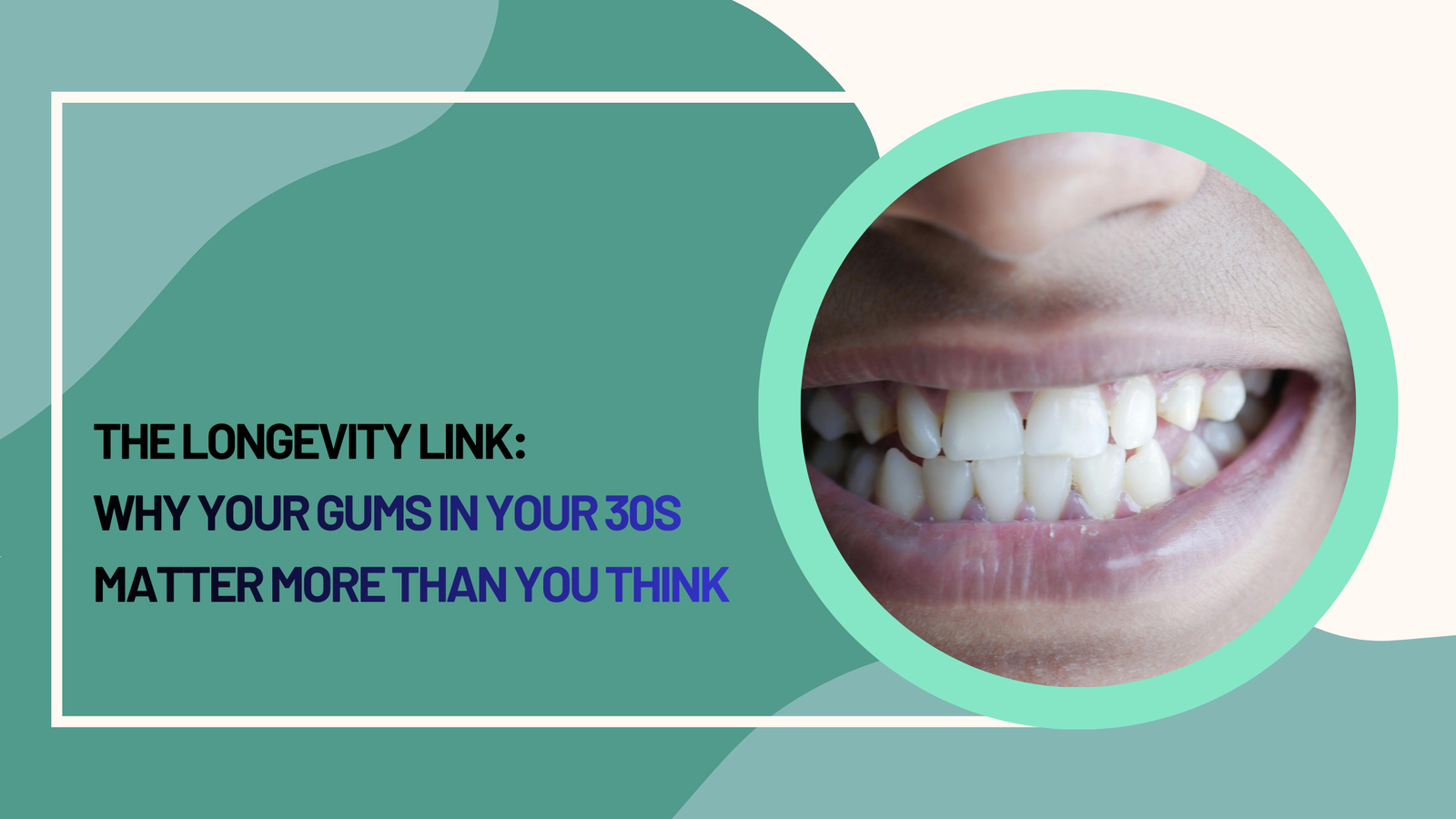
Why This Is Especially Important in Your 30s
Many people mistakenly believe heart disease is only a concern in older age.
However, the groundwork for heart health is laid much earlier.
Your 30s and 40s are when lifestyle habits become established. Your body remains resilient, so damage may not be immediately apparent. Yet, this period is crucial for preventive care.
Gum disease progresses slowly and is often painless, so it can go unnoticed for years.
By the time serious symptoms like loose teeth or gum recession appear, significant damage has already occurred.
Maintaining oral health during this time isn’t just about avoiding dental procedures; it’s about lowering long-term risks to your overall health.
The Important Link Between Diabetes and Oral Health
In Kerala, diabetes is a common topic in health discussions—and rightly so, as it is a prevalent chronic condition.
What many don’t realize is the strong two-way relationship between diabetes and oral health.
Gum disease makes it harder for the body to regulate blood sugar because inflammation disrupts insulin function, complicating glucose control.
Conversely, high blood sugar levels create a favorable environment for bacteria, worsening gum infections.
This creates a vicious cycle:
- Gum disease destabilizes blood sugar levels
- Elevated blood sugar worsens gum disease
Breaking this cycle requires managing both conditions. Notably, improving gum health has been shown to help stabilize HbA1c levels.
Therefore, simple gum treatments can play a role in better diabetes management.
Rethinking “Teeth Cleaning”
Let’s be honest—many people consider dental cleaning optional.
Something done before a wedding or only when the dentist insists.
However, this mindset is shifting.
Today’s dentistry views cleaning not just as stain removal or cosmetic improvement, but as a way to control the bacteria in your mouth before it impacts your whole body.
This method is often called Systemic Biofilm Management.
Rather than just addressing visible plaque, it targets the deeper bacterial layers that cause inflammation.
What Regular Cleaning Really Does
Getting professional cleanings regularly—especially in your 30s and 40s—does more than keep your smile looking good.
It actively lowers health risks affecting your entire body.
1. Reduces Inflammation
By eliminating harmful bacteria, it decreases the inflammatory load on your body, benefiting your immune system and heart health.
2. Protects Your Jawbone
Gum disease affects more than just soft tissue; over time, it can cause bone loss, altering your facial appearance as you age.
Healthy gums help maintain your natural facial structure.
3. Detects Problems Early
Dental visits now go beyond visual exams. Advanced diagnostics can identify early signs of deeper health issues before they become serious.
Dentistry Has Quietly Advanced
If you think of dental cleaning as uncomfortable scraping, you’re not alone—that was the past.
But things have improved greatly.
Modern dental care—especially in places like Kochi—is more advanced, comfortable, and precise.
Ultrasonic Scaling
This technique uses high-frequency vibrations to gently and effectively remove plaque. It’s faster and much less uncomfortable than traditional methods.
Laser Decontamination
Lasers target and destroy harmful bacteria without harming healthy tissue, speeding healing and reducing discomfort after treatment.
AI-Assisted Diagnostics
Technology now enables dentists to detect early-stage problems with impressive accuracy, often before symptoms appear.
All these advancements make preventive dental care easier, quicker, and more effective than ever before.
The Real Challenge: Managing Time and Priorities
The main obstacle isn’t access to dental care—it’s your mindset.
When life gets hectic, it’s easy to delay dental appointments. There always seems to be something more urgent.
But here’s the truth—oral health problems don’t stay confined to where they begin.
They develop quietly. By the time they demand attention, treatment is often more complicated.
A simple cleaning now can prevent much bigger issues later.
A Practical, Everyday Strategy
You don’t need a complex routine to maintain your oral health. What counts is being consistent.
- Brush correctly twice daily
- Don’t ignore bleeding gums
- Floss regularly, even if it feels inconvenient
- Keep up with professional cleanings
- Take care of minor problems before they escalate
These straightforward habits build a solid foundation for lasting health over time.
The Bigger Picture: Longevity Made Simple
When people think about living longer, they often picture strict diets, supplements, or intense workouts.
But true longevity comes from small, steady habits.
Caring for your gums might not seem significant now. It doesn’t offer instant results or dramatic changes.
Yet its effects are quiet, steady, and enduring.
Final Reflection
Your body functions as a whole. Everything is interconnected.
Your mouth, heart, and metabolism all affect one another in ways we’re just beginning to understand.
So next time you notice bleeding gums or consider skipping a dental visit, take a moment to think.
It’s not just about your teeth.
It’s about the health you’re creating for your future.