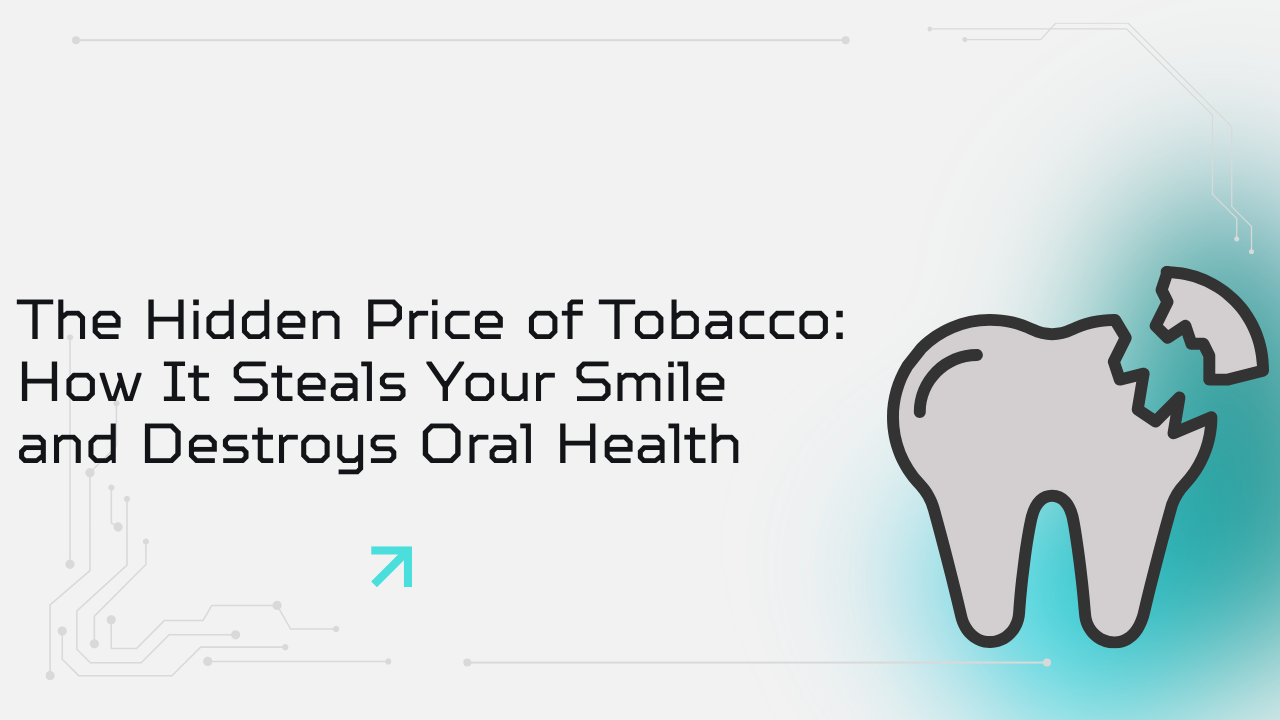
Have you ever realized how your teeth gradually lose their brightness or how your gums start feeling weaker as time goes by? For many people, the cause lies in a habit so common it seems almost harmless — tobacco use. Whether through smoking, chewing, or vaping, tobacco slowly alters the appearance, sensation, and function of your mouth. While most associate tobacco with lung cancer or heart problems, the earliest and most noticeable damage actually begins inside your mouth.
Let’s take a closer look at how tobacco quietly harms your teeth, gums, and overall oral health — and why 2025 should be the year you reclaim your smile.
1. The Initial Impact: What Tobacco Does When It Enters Your Mouth
Each puff, chew, or drag delivers a mix of chemicals — including nicotine, tar, carbon monoxide, and hundreds of other toxins — that immediately attack your oral tissues. Here’s what happens next:
- Reduced blood flow: Nicotine constricts your blood vessels, limiting oxygen and nutrients to your gums. This slows healing and makes them more prone to infections.
- Dry mouth: Tobacco decreases saliva production, which is your mouth’s natural cleaning agent. Without enough saliva, bacteria multiply, leading to plaque buildup, bad breath, and tooth decay.
- Altered taste and smell: Over time, tobacco dulls your taste buds, making food less enjoyable and masking early signs of infection or disease.
What makes this damage especially dangerous is how quietly it progresses. You might not feel pain or see visible changes at first. By the time symptoms show up, gum disease or decay has often already developed.
2. The Visible Signs: What You Can See in the Mirror
You don’t need an X-ray to notice the effects of tobacco on your smile — your reflection reveals plenty of clues.
- Stains and discoloration:
The tar and nicotine in tobacco are stubborn pigments that stick to your tooth enamel. Within weeks, your bright white teeth can turn yellow or brown. Regular brushing does little to remove these stains, and even professional whitening treatments may only offer temporary improvement.
- Persistent bad breath:
No matter how much you brush or use mouthwash, the odor remains. Tobacco dries out your mouth and leaves chemical residues that bacteria feed on, producing sulfur compounds responsible for the unpleasant smell.
- Gum recession and tooth sensitivity:
Tobacco weakens your gums, causing them to recede from your teeth. This exposes sensitive roots, making your teeth appear longer and uneven. You might experience sharp pain when consuming cold or sweet foods — a clear sign of gum recession.
- Loose teeth and shifting bite:
As gum tissue and bone deteriorate, your teeth lose their support. Over time, they may become loose or even fall out. Some people notice subtle changes in their bite or smile shape, reflecting the underlying structural damage.
These issues are more than just cosmetic concerns; they are early indicators of a deeper problem — chronic gum disease, also known as periodontitis.
3. The Serious Harm: Gum Disease and Tooth Loss
Using tobacco is a major cause of gum disease. The combination of decreased blood circulation, excess plaque, and weakened immune defenses creates an ideal environment for problems. Here’s the progression:
- Gingivitis: It begins with gum inflammation. Your gums may appear swollen and bleed slightly, although in smokers, nicotine often masks these signs by narrowing blood vessels.
- Early Periodontitis: As bacteria spread, they create pockets under the gums that trap food and toxins, worsening the infection.
- Advanced Periodontitis: The infection reaches the bone and connective tissues, causing irreversible damage. Teeth may loosen and eventually fall out.
Research indicates that smokers are up to twice as likely to develop gum disease compared to non-smokers, and the condition tends to worsen more rapidly.
Even smokeless tobacco products like chewing tobacco, gutka, or snuff are harmful. They directly irritate the gums, causing localized gum recession and painful sores that are slow to heal.
4. The Hidden Danger: Oral Cancer and Precancerous Lesions
This is where tobacco’s effects can become life-threatening.
Each time tobacco contacts your mouth, it leaves behind chemicals that damage your cells’ DNA. Over months or years, this can cause abnormal tissue growth.
Two early signs to watch for are:
- Leukoplakia: White patches appearing on the gums, tongue, or cheeks.
- Erythroplakia: Red, velvety patches that bleed easily.
If left untreated, both can develop into oral cancer. Tobacco users—especially those who also consume alcohol—have a much higher risk of cancers in the lips, tongue, and throat.
Oral cancer is hazardous because it often starts without obvious symptoms. Small patches, painless ulcers, or persistent sores may go unnoticed for months. That’s why regular dental exams and oral cancer screenings are crucial. Early detection can save lives.
5. The New Risk: Vaping and “Safer” Tobacco Alternatives
By 2025, vaping and flavored tobacco products have become popular, often promoted as cleaner, safer, or even healthier options. However, your mouth cannot distinguish between smoke and vapor.
E-cigarettes still deliver nicotine, which reduces blood flow and decreases saliva production. Chemicals in the vapor, such as propylene glycol and artificial flavorings, can irritate gums and disrupt the oral microbiome—the balance of beneficial and harmful bacteria in your mouth.
Over time, vaping may lead to:
- Gum and soft tissue inflammation
- Increased plaque accumulation
- Dry mouth and heightened sensitivity
- Greater risk of cavities
So, while vaping might be less harmful to your lungs, your oral health still suffers the consequences.
6. The Emotional Impact: How Tobacco Undermines Confidence
Beyond the scientific facts and physical symptoms, there’s a personal aspect to consider — how tobacco gradually erodes your self-confidence.
A lackluster smile, persistent bad breath, and gum problems can make you feel uneasy in social or work settings. Many people report feeling ashamed to smile, talk closely with others, or laugh openly.
It’s not just about looks; it’s about how you feel inside. This subtle decline in confidence is one of the most overlooked harms caused by tobacco.
7. The Positive News: Healing Starts the Moment You Quit
Here’s the uplifting part — your mouth has a remarkable capacity to heal once you stop using tobacco.
- Within 20 minutes: Blood flow improves, delivering more oxygen to your tissues.
- Within 2 weeks: Your gums start to recover, and saliva production increases, naturally cleansing away bacteria.
- Within 1 year: The likelihood of gum disease and tooth loss decreases significantly.
- Within 5 years: Your risk of developing oral cancer is nearly cut in half.
Your teeth become whiter, your breath fresher, and your sense of taste returns. Quitting isn’t just about breaking a habit — it’s about reclaiming your smile. Many dental experts now include tobacco cessation support in preventive care, combining counseling with routine cleanings and oral exams. While quitting can be challenging, the benefits are clear and transformative.
8. Creating a Tobacco-Free Smile: Daily Care Recommendations
Even if you’ve been using tobacco for a long time, it’s never too late to restore your oral health. Here are straightforward, effective steps that can make a significant difference:
| Daily Habit | Why It Matters |
| Brush twice a day with fluoride toothpaste | Protects enamel and removes plaque before it hardens |
| Floss or use interdental brushes | Cleans areas your toothbrush can’t reach |
| Use alcohol-free mouthwash | Reduces bacteria without drying your mouth |
| Stay hydrated | Keeps saliva flowing and neutralizes acids |
| Eat crunchy fruits and vegetables | Helps clean teeth naturally and boost saliva |
| Visit your dentist every 6 months | Detects early signs of disease or lesions before they spread |
| Avoid alcohol and excessive sugar | Both increase the risk of oral cancer and decay |
| Practice stress management | Helps reduce triggers that lead to smoking or chewing |
Consistency is crucial. The mouth heals more quickly when quitting tobacco is combined with good oral hygiene and regular dental check-ups.
9. Why This Is More Important Than Ever in 2025
Tobacco use today looks different but has the same harmful effects. While fewer young people are smoking cigarettes, many are vaping, chewing flavored tobacco, or using nicotine pouches that are marketed as “safe.”
At the same time, many adults who quit smoking years ago underestimate the lasting damage tobacco has caused.
Dentists throughout India are noticing an increase in gum recession, dry mouth, and precancerous lesions among younger patients—not just among traditional smokers. This makes discussions about tobacco and oral health more relevant than ever.
Public awareness campaigns, school programs, and social media are gradually encouraging better choices. However, true change begins with each individual—one decision, one day, one choice to quit.
10. Your Smile Reflects Your Story — Make It a Healthy One
Your smile is more than just your teeth and gums; it’s how you connect with others, express yourself, and present your identity. Tobacco use dulls your smile—not only in appearance but also in confidence and vitality.
Quitting tobacco isn’t about losing something; it’s about gaining your health, your looks, your energy, and your self-confidence back.
Stains can disappear, gums can recover, and even damaged tissues can heal with proper care. Every step away from tobacco is a step toward a brighter, healthier future.
So next time you reach for a cigarette or chewing tobacco, take a moment to imagine your smile five years from now—radiant, confident, and full of life. That’s the future waiting for you once you quit.
Final Thoughts
Tobacco takes a lot from you—your health, your smile, and your confidence—but it doesn’t have to win. Start small: swap one cigarette for a walk, one craving for a glass of water, one habit for a new routine. Keep your dentist informed; professional support and encouragement can make quitting easier.
Choosing a tobacco-free life means protecting more than just your teeth—you’re choosing yourself. And that’s the most powerful choice you can make for your oral health.