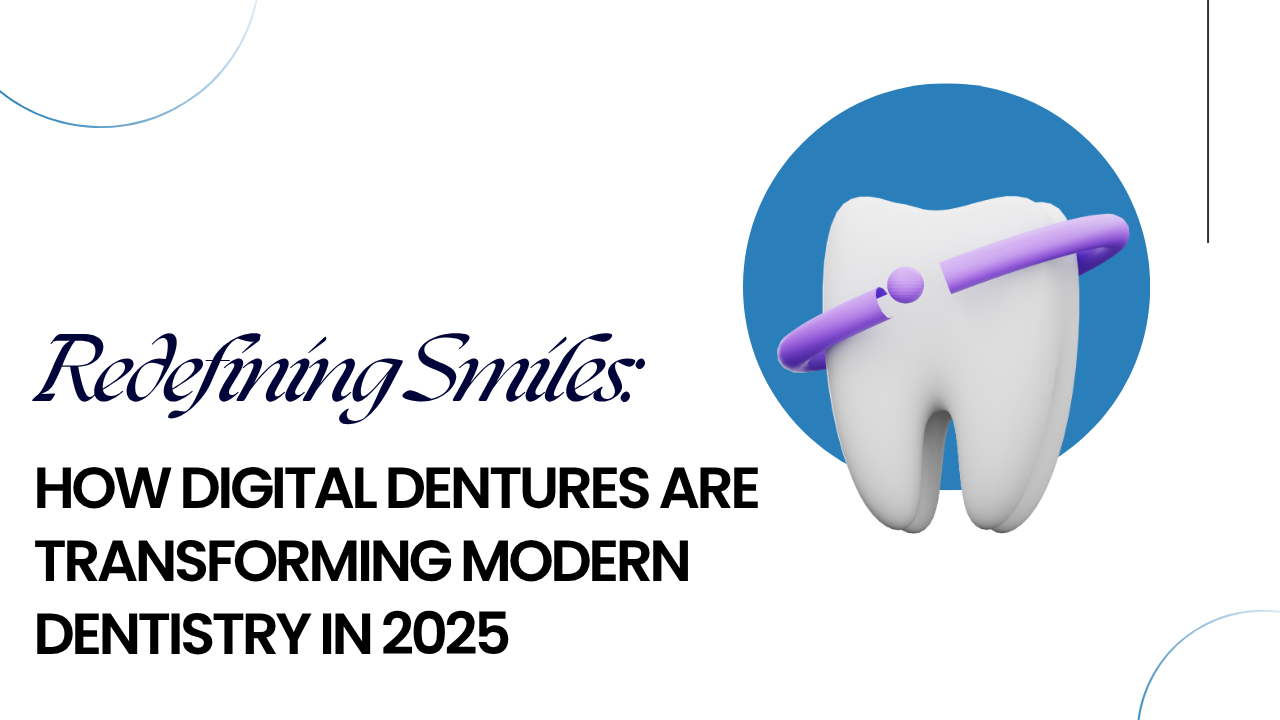
In today’s rapidly evolving world, healthcare is becoming smarter, quicker, and more focused on patient comfort—and dentistry is no exception. One of the most exciting innovations transforming modern dental care is the emergence of digital dentures, a breakthrough that merges advanced technology with patient comfort to revolutionise smile restoration.
1. The Evolution of Dentistry
Dentistry has significantly progressed from the days of plaster molds and wax impressions. What was once entirely dependent on manual expertise has now become a smooth integration of technology and skilled craftsmanship. As patients increasingly desire treatments that are both efficient and tailored to their needs, digital workflows have become the new benchmark.
From diagnostics and orthodontics to restorative procedures, the adoption of digital dentistry has transformed how dentists plan, design, and execute treatments. Now, with digital dentures, this transformation has reached one of the most vital yet traditionally labor-intensive areas of dental care—fabricating complete and partial dentures.
This advancement is not just about replacing old techniques; it’s about enhancing every stage of the process to achieve levels of precision, speed, and comfort that were previously unimaginable.
2. What Sets Digital Dentures Apart
Fundamentally, digital dentures are created using computer-aided design (CAD) and computer-aided manufacturing (CAM) technologies. Instead of relying on traditional impressions, wax try-ins, and manual tweaks, the entire process is conducted through digital scanning, 3D modeling, and precise manufacturing.
This represents a quiet revolution in dentistry—eliminating guesswork, reducing the number of patient visits, and improving accuracy. Every detail, from shaping the denture base to aligning the artificial teeth with the patient’s bite, is digitally designed and securely stored for easy reproduction or modification.
The true advantage lies not only in the technology itself but in the enhanced control and predictability it brings to the process.
3. The Digital Workflow—A Harmonious Process of Precision
Creating digital dentures follows a streamlined and organized workflow that ensures consistent results from beginning to end.
Step 1: Digital Impressions
Instead of traditional impression materials, the dentist uses an intraoral scanner or scans an existing denture to capture the patient’s oral anatomy. This high-resolution image precisely records every curve, contour, and ridge, producing an accurate digital model of the mouth.
This method is more comfortable for the patient, quicker for the dentist, and significantly more precise than conventional impressions.
Step 2: Virtual Design
The scanned data is imported into specialized design software, where the dentist or dental technician digitally sculpts the denture—fine-tuning tooth placement, shape, bite alignment, and gum contours with exceptional accuracy. The software offers real-time visualization, ensuring the design fits the patient’s unique anatomy and aesthetic desires.
Step 3: Digital Fabrication
After finalizing the design, it is sent for milling or 3D printing. The dentures are crafted from durable, biocompatible materials such as high-density PMMA or specialized resins. The outcome is a strong, lightweight, and natural-looking denture that fits perfectly and offers long-lasting wear.
This workflow removes several intermediate steps—no need for multiple impressions, wax setups, or long waiting times—making the process quicker, more efficient, and much more comfortable for the patient.
4. Why Digital Dentures Are Important Today
The significance of digital dentures in 2025 goes beyond just convenience. They represent a move toward data-driven accuracy and patient-focused care, which are the key trends in modern dentistry.
In a time when people prioritize both time and comfort, digital workflows enable personalized treatment with fewer appointments and predictable outcomes. Additionally, with clinics and labs increasingly connected via cloud-based systems, collaboration becomes faster and more dependable.
For dental practices, adopting this technology means fewer remakes, less manual work, and smoother communication between the clinic and lab. For patients, it results in a better fit, improved function, and a smile that feels naturally theirs.
5. Key Benefits
Digital dentures don’t just update the manufacturing process—they improve the entire patient experience from consultation to final delivery.
Here’s what sets them apart:
- Exceptional Fit and Comfort: Digital scans provide precise measurements, ensuring a snug fit that reduces sore spots and the need for frequent adjustments.
- Fewer Appointments: Unlike traditional dentures that require multiple visits for impressions, try-ins, and fittings, digital dentures often cut the number of appointments in half.
- Faster Turnaround: Once designed, the production process is swift. In some cases, a full denture can be ready within just a few days.
- Digital Archiving: Every design is saved digitally, so if a denture is lost or damaged, it can be quickly recreated without starting over.
- Durability and Appearance: Materials used in digital manufacturing are highly durable and look very natural, offering both longevity and aesthetic appeal.
- Consistency: Digital design reduces human error, ensuring reliable results across different cases—something that manual methods rarely achieve.
6. How Technology Improves Aesthetics and Function
One of the standout benefits of digital dentures is how technology enhances both their appearance and performance.
Software algorithms can simulate natural jaw movements, ensuring the denture supports balanced chewing and clear speech. The software’s tooth libraries allow precise selection of shapes, sizes, and shades to match each patient’s facial features and smile.
The digital process also improves occlusal control, meaning the upper and lower arches are designed to work together smoothly. The outcome is a denture that looks natural, feels comfortable, and functions effectively.
7. Moving Toward Sustainable Dentistry
Beyond clinical advantages, digital dentures also promote sustainability in dentistry.
Traditional methods involve multiple plaster models, wax materials, and physical waste from repeated remakes. Digital workflows significantly reduce material use, cutting down waste and environmental impact. Designs are stored digitally, eliminating the need for physical storage and excess lab inventory.
As more clinics and labs adopt eco-friendly practices, digital dentures fit perfectly into creating a sustainable, paperless, and waste-free dental environment.
8. Digital Dentures and Contemporary Dental Practices
For progressive dental clinics—particularly in areas like Kerala where patients are becoming more informed—offering digital dentures goes beyond merely keeping up with trends. It helps establish the clinic’s reputation as a technology-focused practice that prioritises innovation and patient comfort.
Implementing digital workflows demonstrates that a clinic is ready for the future of dentistry. Patients recognize this difference, associating digital care with accuracy, cleanliness, and reliability—factors that increasingly influence their choice of dental provider.
Whether located in a major city like Kochi or a local clinic in Thrissur, the effect is consistent: adopting digital dentures places the clinic at the cutting edge of modern dental care.
9. The Importance of Laboratories in the Digital Transition
Dental laboratories are essential to the success of digital denture production. Modern labs equipped with 3D printers and milling machines can quickly create highly customized prosthetics.
The collaboration between clinics and labs is now more efficient thanks to cloud-based case sharing. Dentists can upload patient scans and notes, allowing labs to design and manufacture dentures remotely while maintaining ongoing communication.
This digital partnership ensures precision, traceability, and accountability throughout the process, transforming a manual, fragmented workflow into a seamless, efficient system.
10. Overcoming the Learning Curve
Switching to digital dentures involves an initial learning phase. Dentists and technicians need to become proficient with scanning techniques, design software, and file management.
However, training programs, certifications, and support from technology providers have simplified this transition. As more professionals adopt digital systems in their daily routines, efficiency improves naturally, and the benefits become evident.
The results are clear: faster turnaround times, more satisfied patients, and a modern workflow that is easier to expand.
11. Looking Ahead: Combining Precision with Personalization
The development of digital dentures continues to advance. The next stage will feature AI-assisted design, where software uses data from thousands of successful cases to predict the best tooth alignment and bite balance.
There are also improvements in biocompatible resins and multi-material 3D printing, enabling even more realistic gum textures and flexible denture bases.
In the near future, real-time scanning and chairside printing may allow patients to receive dentures on the same day—a process already being tested in leading clinics worldwide.
Ultimately, the future of denture fabrication will be characterized by speed, accuracy, and customization—where every prosthetic is digitally crafted to suit not only the patient’s mouth but also their lifestyle.
12. The Patient Perspective
Even without personal anecdotes, one fact is clear: patients increasingly appreciate experiences that are efficient, predictable, and comfortable. Digital dentures reflect this shift in expectations. Without the need for traditional impressions, appointments become cleaner and quicker. The enhanced fit provides better functionality from the very first day. Additionally, the precise aesthetics allow patients to smile confidently without concern over an unnatural look. When patients understand that a replacement can be created within hours from a saved digital file, it fosters trust and reassurance—key elements of patient satisfaction in modern dentistry.
13. A New Standard in Comfort and Confidence
Digital dentures demonstrate how technology and skilled craftsmanship can harmoniously coexist in healthcare. They do not replace the artistry of dentistry but rather enhance it. Every millimeter is carefully measured, every angle thoroughly examined, and every smile digitally refined before the final product is made. As more clinics adopt these technologies, patients will begin to see dentures not as bulky substitutes but as digitally designed extensions of themselves—comfortable, durable, and natural.
Conclusion: The Digital Smile Era
Dentistry has entered a new era where technology operates seamlessly behind the scenes to deliver flawless outcomes. Digital dentures lead this transformation by bringing precision, efficiency, and elegance to one of dentistry’s most traditional fields. For dental professionals, they provide a more efficient workflow that improves accuracy and productivity. For patients, they offer a comfortable, natural-looking smile that restores both function and confidence. The move to digital dentistry is not merely about using new tools; it represents embracing a new mindset—where every smile is crafted using data, shaped with care, and delivered with unparalleled precision. Looking ahead to 2025 and beyond, digital dentures stand as a symbol of dentistry’s progress—a perfect blend of innovation, artistry, and human connection.